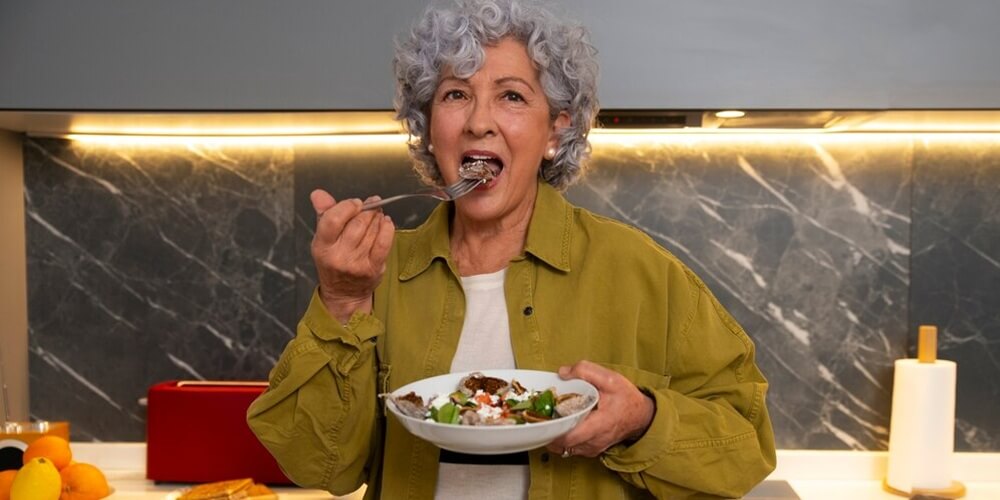
People over 40 face unique challenges when trying to slim down. Metabolic changes and hormone fluctuations can make even the simplest weight loss strategies ineffective. In order to develop a weight loss women 40 program, it is important to understand these factors. Before negative reactions to hormone changes, women over 40 tend to focus on themselves. As their confidence in themselves and their capabilities increases, they are able to take more and greater risks. People over 40 are also able to ponder the long-term consequences of their actions. People in this demographic want to be healthy as they get older and prepare for retirement. You should understand something about adjusting your nutrition. This guide is designed to help those struggling to lose weight after 40.
There are myriad obstacles that women over 40 weight loss journeys that men may never experience. For example, women’s bodies under stress often store fat in their bellies instead of burning it off. Nutrition that is low in fat, whole foods, and plant-based is beneficial when women over 40 are involved. Dieting requires careful planning and commitment, which can be both challenging and rewarding. Social and cultural stereotypes may also affect women’s struggles with weight, pressure, and dissatisfaction. Furthermore, they should seek to make progress and consider pleasures when weighing physical activities.
The role of hormones in a woman’s weight loss, particularly long-term weight loss, is significant. To make matters worse, both perimenopause and menopause both involve hormonal shifts that will make long-term over 40 weight loss challenging. Women become more apt to gain additional body fat during perimenopause. In what’s about to follow, we’ll explore a few of these important hormones and weight and how their level will affect weight, where the weight accumulates, and how difficult it is to shed it. We’ll explore a few additional hormones that can contribute to weight loss difficulty during perimenopause and menopause, too.
Estrogen has a few jobs; one of the biggest is fat storage. In all other ways, estrogen is a big helper in your journey to lose weight after 40. It manipulates insulin to decrease fat storage, increases metabolic rate, and decreases appetite by decreasing ghrelin and increasing leptin. Unfortunately for weight loss, cravings for ‘comfort food’—like the delicious sweet stuff—also often accompany stress. Unsurprisingly, in most women, these hormonal consequences cause fat to build up in your body and tummy. As your fat content in your body starts to rise, your estrogen levels rise with it, and with it can cause even greater insulin resistance. And it becomes a vicious cycle.
Progesterone also impacts where you store your body fat, and women with low progesterone levels have been correlated in studies with the uncomfortable form of body fat known as visceral fat. Visceral fat can be more dangerous over time to our health, and it does not respond as readily to diet and exercise. Finally, increased cortisol levels caused by a consistently high stress response can also contribute to greater food intake, particularly if the foods you reach for when stressed are more calorically dense, such as sweets or high-fat treats. This combination of hormonal effects can make weight loss women 40 seem quite difficult, despite eating healthfully and exercising regularly. It’s also worth mentioning briefly that there are some less common imbalances, such as hypothyroidism or PCOS, which can also make weight management difficult. The biggest whine I hear about a lot of women in perimenopause and menopause, or attempting to shed ‘hormonal weight,’ is that weight maintenance or weight loss simply was not a problem in the first place, and, all of a sudden, it seems like a constant battle. That is, it’s an all-too-familiar sensation, but a very individual one. Because many women have similar types of hormonal issues doesn’t mean that solutions will be one and the same. In a section at the end of this guide, I discuss some strategies that are appropriately targeted to certain hormones and weight and hormone symptoms and how to strategize the plan with a dietitian and/or healthcare professional. If you need to adjust the plan to fit the way you feel, this is a good place to do it.
Metabolic changes following age 30 and especially 40 are experienced by most women (and some men, typically after the age of 50). Metabolism is typically “equated with weight loss”; simply put, those who have a higher metabolism women 40 will tend to be able to eat more without gaining weight or lose weight after 40 more rapidly. Unfortunately, the opposite is also true. Women who previously could eat what they wanted, when they wanted, see the scale shift after a certain age. A degree of muscle loss at around one pound per year can translate into overweight and obesity over time. Failing to adjust both diet and physical activity will cause weight gain to occur because women at this age often complain of small or no appetite from reduced metabolic engine power.
In part two of her argument, her cortisol-to-DHEA ratio is showing an elevation, as well as her blood sugars and body weight having spiked. One of the recommendations she has made is exercise, both cardiovascular and strength training. Strength stands out in particular. Women, she explains, are at the mercy of losing “5%” of total muscle mass every ten years after the age of 35. Her metabolic engine begins to downshift. “Less muscle requires fewer calories to be burned,” she says. Those pounds start adding up over time because thin muscle might mean she is burning 25 to 50 fewer calories every day, and before a woman knows it, she packs an extra 200 to 300 calories every day. “You know the location,” she says. As the years of weight loss begin to pile on, reduced metabolism women 40 becomes apparent even more. It’s no wonder women at age 40 panic over the sudden onset of water retention, exhaustion, and “ring around the middle” weight gain. Recommendations for losing weight fall into two categories: metabolic and psychological. For the former, she suggests finding the right “fuel,” which are whole, natural, organic foods that keep “calories low and nutrient content high.” She’ll also wake up her metabolism women 40 by having her clients learn to eat by following Guidelines for Optimal Nutrition. And, she emphasizes strength training as a muscle-preserving measure. Long, slow aerobic exercise is out and is replaced by brief, high-intensity bursts of energy in her approach to exercise. She also recommends de-stressing your life to reduce cortisol.
Many women over 40 are now actively searching for healthy weight loss solutions that work in the long term. The following weight loss tips 40+ can help you effectively, efficiently, and safely shed excess body fat and develop a healthy eating plan: – Set realistic goals: Before you start, consult with professionals to set realistic and achievable goals, taking into account outside factors such as hormonal levels, metabolism, and healthy weight. It is important to avoid failure and frustration in the long term by setting realistic goals for yourself. – Balance nutrition: Aim to consume fresh, whole foods at every meal, while avoiding refined grains and added sugars wherever possible. Not only does this boost your overall health by providing essential nutrients, but it encourages healthy long-term over 40 weight loss too. – Portion control is key: The secret to a healthy diet is to listen to your body and only eat when you feel hungry. Do not restrict or eat too much, but instead eat until you are satisfied and you should be fine. For example, dividing the weight into “every day” and “odd days” is a practical solution for many people. – Practice mindful eating: Struggling with the diet? Consider reading up on two popular strategies for healthy eating. One involves increasing your awareness of what you eat and taking it slowly. Another approach boosts morale and makes the process more enjoyable. A fitness instructor suggests a similar way to use a food diary and keep track of food and lifestyle changes. As a result, studies consistently demonstrate that steady monitoring of over 40 weight loss and diet increases both negative and positive motivation for individuals. Last year, a study found that overweight individuals who weigh themselves regularly were more motivated and committed to developing healthier habits.
The basis for effective long-term weight loss is a daily focus on exercise and nutrition. For women over 40, a change in lifestyle that involves heart-thumping exercise and proper nutrition is the key to losing weight, maintaining it, and creating long-term healthy improvements in your life. Cardio exercise, strength training, exercise, and balanced nutrition must all become a part of your routine exercise regimen. Cardio exercise must be done 3-5 days a week in one bout of exercise for 40-60 minutes, two 20-30 minute sessions, or through taking a series of many small 10-minute exercise sessions. The intensity of your exercise routine must enable your exercise program to manage weight through burning 200 or more calories daily. Add to your overall daily activity through selecting an activity that can be a regular part of your routine and is pleasurable to do. Suggestions include taking a brisk walk, gardening, mowing, participating in a sport, or any activity that gets your heart pumping.
Strength training must be conducted two to three days a week and alternate through all your larger muscle groups. Activities must be of a high to moderate level of intensity in an attempt to obtain target levels. 8-10 strength actions must be accomplished that target major muscle groups. Begin with one set of each activity, 8-15 repetitions, and move to 8-10 activities and two to three sets for each activity. To target nutrition, a portion of a well-planned weight management program must include treating obesity by underlining the significance of such behaviors as consuming a high density, balanced intake of carbohydrates, proteins, and fats; portion control and calorie restriction; meal planning; and moderation in eating. Step one is knowing about types of energy, nitrogen, and fat that we require, and portion sizes. Formulate a food substitution and meal preparation schedule that accommodates your work, home, travel, and family routines, and pay attention to food-related cues. Remember: in order to lose weight after 40, one must consume fewer calories than one takes in. Increased activity through a planned exercise routine in addition to diet will yield the most effective weight management and long-term weight loss success. And remember, exercise alone will not cause ideal weight loss, nor will proper exercise in combination with improper diet.
So, if both diet and exercise are so critical to weight maintenance, why is there an emphasis on one and not the other? Simple — people do not necessarily want to do both. When given an either/or choice, many women will choose exercise. So, for women who are seeking to lose weight after 40 — whether you are brand new to fitness or in the aftermath of injury, illness, or life events — exercise is undoubtedly a vital component of your overall weight loss program. There are also some individuals who may have been so focused on dieting and dieting alone that they have not yet grasped the immense value of the addition of cardio and strength training, of rates of learning, actualizing goals, and seeing oneself as their new, ideal selves. As most individuals will agree, in order to maintain your weight or lose effectively, you need to combine diet and exercise. It just works. Lifestyle change is not easy. Real change takes time. In cases of disease risk factors, it is important that single modifications; weight loss women 40 through decreased calorie intake or exercise are not the answer. Instead, multiple lifestyle changes and healthy living habits should be employed to achieve long-lasting results, including the recovery and improvement of metabolism.
Welcome to Nisantasi Cosmetic, How can I Help You?